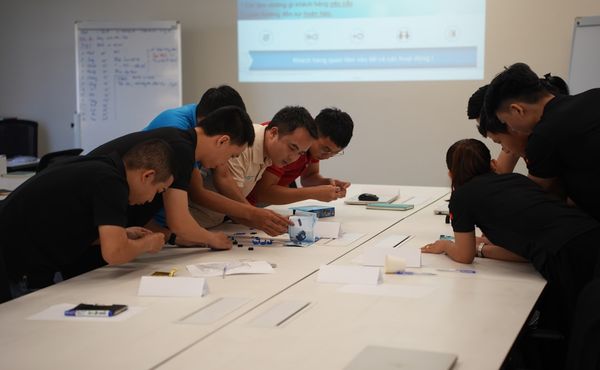
In today's rapidly changing business landscape, the most effective leaders aren't the ones who have all the answers — they're the ones who can adapt, listen, and respond in the moment. This is exactly what improv training teaches.
The Art of Active Listening
One of the foundational principles of improv is "Yes, And" — the practice of accepting what your scene partner offers and building upon it. In a corporate context, this translates directly to active listening and collaborative problem-solving.
Research from Stanford's Graduate School of Business has shown that leaders who practice improvisational techniques report a 40% improvement in their team communication scores and a significant increase in psychological safety within their teams.
Building Psychological Safety
When leaders model the willingness to take risks, make mistakes, and recover gracefully — all skills honed through improv — they create an environment where their team members feel safe to do the same. This psychological safety is the bedrock of innovation.
The best leaders I've worked with all share one trait: they're comfortable with not knowing what comes next. That comfort comes from practice, and improv is the ultimate practice ground.
Practical Exercises for Your Next Team Meeting
You don't need to book a theatre to start practising these principles. Here are three exercises you can try in your next team meeting:
- Word-at-a-time story: Build a story where each person contributes one word. This teaches listening and letting go of control.
- Yes, And brainstorm: For 10 minutes, every idea must be met with "Yes, and..." before adding to it. No blocking allowed.
- Status switch: Practice presenting ideas from different "status" positions — high authority, equal partnership, curious learner.
The ROI of Improv Training
Companies that have invested in improv-based leadership training consistently report measurable improvements in team collaboration, meeting effectiveness, and employee engagement. The skills learned are immediately transferable and the impact compounds over time.